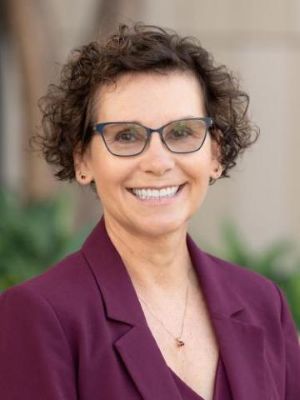
In this episode of the Impactful Leaders Podcast, host Jeff Schroetlin speaks with Dr. Brookie Best, Dean of the UC San Diego Skaggs School of Pharmacy and Pharmaceutical Sciences. With more than two decades of experience spanning clinical pharmacy, education, and research, Dr. Best shares how an early love for math and science ultimately evolved into a passion for people-centered care. She reflects on discovering pharmacy as the ideal blend of scientific rigor and deep human interaction, noting, “The primary responsibility of most pharmacists is actually educating patients, caregivers, and other healthcare providers.”
Dr. Best, also Professor of Clinical Pharmacy and Pediatrics, describes her unexpected path into academia, shaped by opportunities that emerged as UC San Diego launched a new pharmacy school while she was completing her fellowship. As a founding faculty member, she gained leadership experience quickly, from building programs to chairing major committees. Mentorship played a central role in her trajectory. “Both my senior mentors and peer mentors really helped me navigate the concept of taking on new responsibilities,” she says.
Now serving as the school’s third dean, Dr. Best discusses how her long-standing connection to UC San Diego informs her collaborative, systems-minded leadership style. Her early priorities were taking a “teenager” of a program into a more adult organization (strengthening infrastructure, amplifying national visibility, and supporting faculty and trainees). Her leadership has evolved around a singular guiding philosophy: “My job is to support my people… and then get out of their way and let them fly.”
Looking ahead, Dr. Best shares her vision for the future of pharmacy education and research, from curricular innovations to scientific discovery in AI, pharmacomicrobiomics, breast milk therapeutics, and ocean-derived pharmaceuticals. She emphasizes the increasing need for leaders to balance internal innovation with external advocacy in policy and practice, ensuring pharmacy remains a cornerstone of community health, scientific advancement, and interprofessional collaboration.
Leaders must be humble, she concludes. “The higher you go, the less you know” about what’s actually happening in your organization and with frontline employees. Be receptive to feedback and willing to change, she advises.