Impactful Leaders Podcast | Accelerating Physician Leader Impact: Gaurava Agarwal, M.D.
 Scaling Well-Being at Work
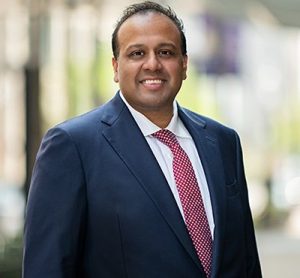
Dr. Gaurava Agarwal, Vice President and Chief Wellness Executive at Northwestern Medicine, brings a systems-oriented approach to leadership and workforce well-being. In this episode of our Accelerating Physician Leader Impact series, he shares his journey from clinical psychiatry to shaping organizational culture, emphasizing prevention over remediation. His clinical work led him to take care of “impaired professionals” and consider the human costs for them and those they oversee. “I started asking, is there a role for prevention here—using the data I’ve amassed to help people never need to see me in the first place?” he reflects.
In this conversation with Michael Anderson, M.D., Co-Executive Director of WittKieffer’s Physician Leadership Institute, Dr. Agarwal explores the profound impact of leadership (especially “good bosses”) on healthcare organizational well-being. He highlights research showing that the quality of leadership can outweigh even structural work design. “If I could help everyone have a good boss, that seemed like it would move the needle around well-being,” he explains. This insight drives Northwestern’s strategy to embed wellness into leadership development, recognizing that culture change requires distributed leadership and actionable metrics—not just aspirational goals.
Dr. Agarwal also introduces the concept of “work determinants of well-being,” a framework that identifies system-level factors—such as PTO utilization—that predict burnout risk in clinicians and others. By operationalizing these metrics, Northwestern empowers managers to act on data rather than abstract concepts. He stresses that wellness and productivity are not opposing forces but interconnected priorities: “Our financial, quality, and safety metrics cannot be achieved without the well-being of our workforce,” he says. His approach reframes wellness as a strategic imperative, not a luxury.
Finally, the episode looks ahead with optimism. From ambient AI reducing administrative burden to team-based care models, Dr. Agarwal sees technology and collaboration as keys to sustainable practice. He calls on leaders to embrace adaptability and courage, reminding us that healthcare’s future depends on reimagining entrenched norms. For physician executives and health system leaders, this conversation offers actionable insights on scaling wellness, balancing competing priorities, and leading with clarity in an era of transformation.