What if one small device could change the way the world understands its own heartbeat?
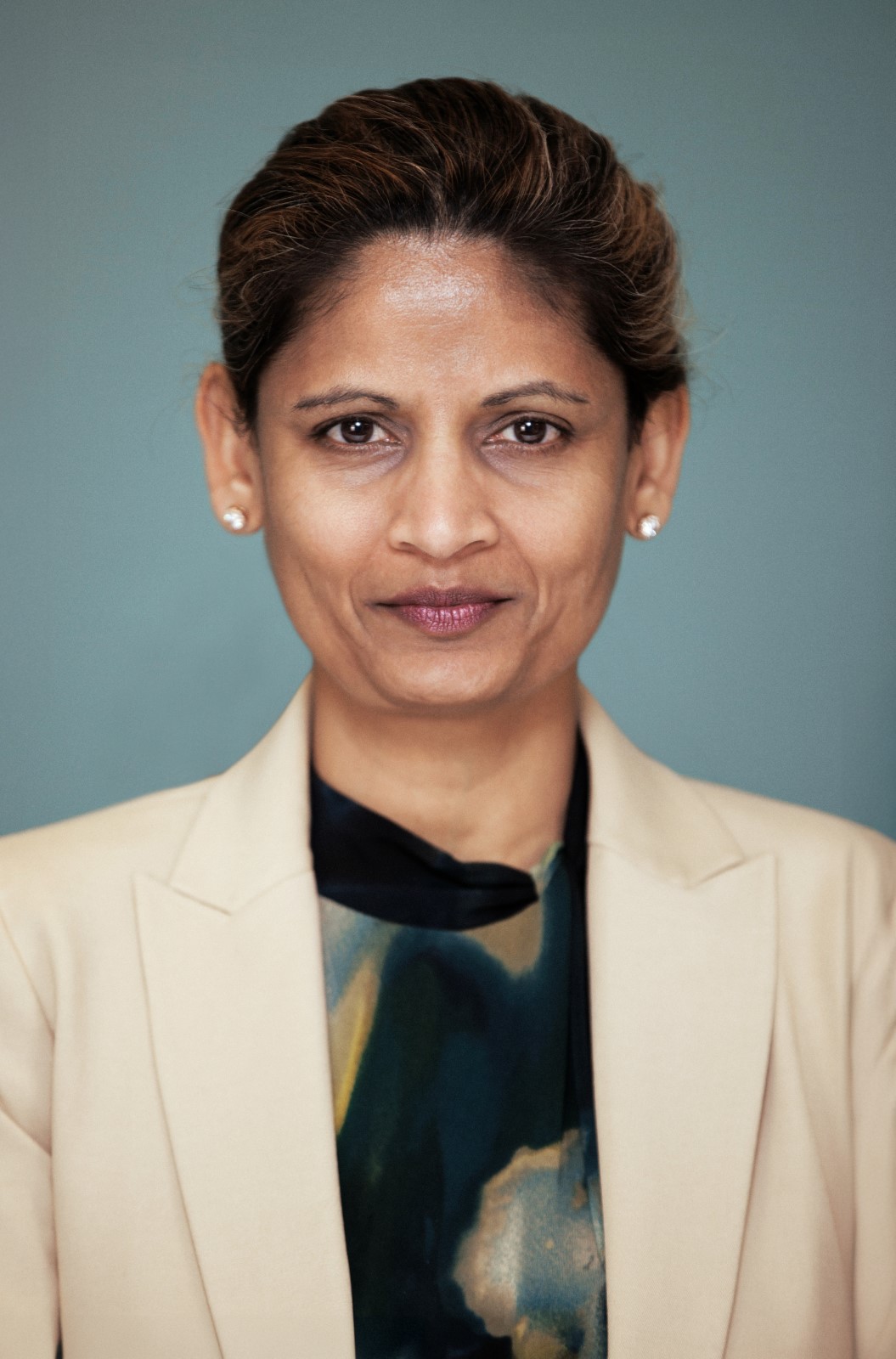
In this episode of Converge Cast, Ysette Witteveen and Lisa Casper sit down with Priya Abani, CEO of AliveCor, a leader redefining cardiac care by making it personal, portable, and profoundly more proactive. Priya isn’t simply running a medtech company; she’s championing advancing a future where lifesaving cardiac insights are no longer confined to hospital walls, but accessible to anyone, anywhere, exactly when they’re needed most. It's a shift from traditional, reactive care to a world where heart conditions are caught earlier, treated faster, and often prevented entirely.
Under her leadership, AliveCor has transformed a traditionally clinical, cumbersome test into a simple, intuitive experience that fits in the palm of your hand. But the true breakthrough begins after the reading. Priya is building an ecosystem where continuous monitoring, advanced AI, and actionable insights replace the guesswork that has defined cardiac care for decades. Her mission is bold: shift healthcare from reactive “sickcare” toward a world where heart conditions are caught earlier, treated faster, and often prevented entirely.
This episode explores the movement Priya is driving -- one where a person’s home becomes an extension of the clinic, where geography no longer determines quality of care, where hospitals can more easily monitor and where every heartbeat becomes a data point that technology can help interpret. Through clinical rigor, visionary partnerships, and a relentless focus on patient impact, Priya is redefining what’s possible in cardiovascular health.
AliveCor isn’t just building devices. They’re rewriting the future of heart care, one hospital, one recording, one insight, one life at a time.
(Full transcript available below)
Chapter 1: Welcome and Priya’s Origin Story & Career Path
Ysette Witteveen: Welcome to WittKieffer's Converge webcast. I'm Ysette Witteveen, Practice Leader for Interim and Investor-Backed Healthcare and Life Sciences.
I'm joined here by my colleague, Lisa Casper, who leads our consumer health and wellness area. We're very excited to have Priya Abani, CEO of AliveCor, who, with the cardiac device, has transformed cardiac care, and with the expansion from consumer to hospital, we're very excited to have a conversation with her. AliveCor is a VC-backed company with notable, prominent investors such as Bold Capital Partners, Khosla Venture, Qualcomm, and others. I have been very impressed over the years how Priya has built the organization and significantly grown it. Priya, could you share a bit about your background and what led you to join AliveCor?
Priya Abani: Yes, for sure. First of all, thank you so much for having me on this. I'm really excited to talk to you and also talk to everybody listening. So, from an early age, I had a passion for math and logic, and my dad was the first person in my life to notice this spark and nurture it. Or maybe he created this spark, teaching me, you know, basic when I was this 12-year-old. Obviously, I went on to learn Fortron and COBOL for all of you who are in the same decade space as I am.
But, more than a basic lesson in computer science, this early introduction was very formative, you know, igniting my curiosity about complex systems, but how do you make complex, simple, and my love for, you know, solving problems through technology.
And, to be honest, that early exposure gave me the confidence to navigate the world that we are in today, which is shaped by data, right? So it led me to Intel, Amazon. Eventually, now where I am at AliveCor, so I've spent, like, multiple decades obsessed with how technology interacts with the human experience.
And just where I am at AliveCor is I've been very fascinated by the healthcare delivery system, so when the AliveCor opportunity came in 2019, it felt like the perfect intersection of my background in, you know, technology, AI, scale, and a deeply meaningful mission.
And our patient-centered approach to cardiac care inspired me, made me feel confident that working to advance that vision was literally the next, you know, the right next step in my career. So, again, thank you so much for asking that question.
Chapter 2: Putting a Clinical Test in Your Pocket (The Consumer ECG Impact)
Ysette Witteveen: Oh, great. Well, fantastic background, and fantastic what you're doing for consumers. How do you believe AliveCor's personal ECG devices are changing the landscape of cardiac care for consumers?
Priya Abani: Yeah, so, it's interesting you ask that, right? That's kind of the question I asked when I first joined the company. So, AliveCor was, the first to launch an FDA-cleared, portable personal ECG device. I think the company fundamentally changed the landscape by taking a test that was used to require a hospital visit. And a massive machine, and literally put it in a user's pocket.
And I give full credit to our co-founder, Dr. David Albert, and, you know, all of the founders who are basically still with us in the company.
So, I think the early success was driven by people who knew that there was a problem, or somebody, you know, targeted towards patients who knew that they have a heart problem or had a family history, and wanted a way to prove their symptoms to their doctors. We focus on retail and e-commerce to ensure anybody could access this tech without a barrier.
Now, as we have grown, we realize that a single ECG is just a snapshot. And to truly change outcomes, patients need a very comprehensive view of their heart health. So, we started adding things like the CardioCare subscription, to move from selling a device to providing a service. It gives me great pleasure to tell you that, you know, we have greater than 300,000 subscribers now on the CardioCare service. And it basically allows us to offer deeper AI determinations, things like cardiologist reviews, digitally provided, monthly trend reports.
So you're no longer just talking about data, you're talking about insights and then actions. So how do you turn the data in and narrative? And what we're finding is that the subscription brings, like, value and peace of mind, which a one-off hardware may not, you know, completely offer.
It also keeps the user engaged with their health routine, not just… or their health daily routine, right? Not just that when they feel like they have a palpitation.
And the last thing I want to point out is the reason why we stand apart through a wavering commitment to clinical validation, right? This is… this is kind of what we focus on. It takes a lot of focus, because there's so many other wellness metrics now in the world. We prioritize the rigorous path of regulatory clearances, peer-reviewed validation. No matter how much the complexity. So, this ensures that the data we provide isn't just a snapshot, but a medically actionable insight.
And, you know, most important is our solutions provide this in-depth heart health… heart data and insights that competitors cannot match. And our goal is to obviously, you know, keep on improving the bar on ourselves. So, in many ways, we just look at ourselves as competition, and our prior version as competition. What I really enjoy is that, you know, CardiMobile is the number one cardiologist-recommended personal EKG. It is a direct validation from the medical community that our technology meets this high standard required for clinical use. So, thank you again for the question, and…sorry for the long response.
Chapter 3: Proof Matters: User Stories & Outcomes
Lisa Casper: So, Priya, can you share success stories or feedback from users that highlight the impact of your devices?
Priya Abani: Yeah, I mean, that is a great question, and that is the reason why we do what we do, right? So, every week, our heads of product technology and I, we sit and read reviews of our product on Kardia.com, on Amazon, on all the different retailers that we use, and we frequently hear from users who are completely asymptomatic, so no pain, no dizziness, but they felt an off sensation. So, we keep reading stories of patients who felt palpitations for years but were told by doctors that it was just anxiety. Because of the symptoms never happened during an office visit, right? And that's where I think using Kardia, these patients finally have the medical-grade evidence to show to their doctor, leading to life-changing diagnosis and treatments. So to your question, let me share a few stories.
Dr. Cleveland Francis, who's a cardiologist, and by the way, an amazing musician, unfortunately, he collapsed at home. And after stabilizing, he used an AliveCor ECT device to record a clinical-grade reading in just 30 seconds. He sent it to his doctor, who… so this is a cardiologist sending his reading to a doctor. Who quickly identified the issue without multiple trips to the hospital, right? And then the right… the right treatment ensued.
Another one of our users, hoped, yes, she's an EA, executive assistant, and after a change in her medication started experiencing what she described as heart palpitations, leading to a series of doctor's visits, several tests, and even an ablation procedure. However, despite worsening symptoms, she didn't have a formal diagnosis and was told multiple times that everything was fine. This is prior to all of the, you know, things that took place. So finally, a co-worker suggested that she try a cardiomobile ECG device, and the data captured directly led to the formal diagnosis of her AFib and all of the other things that happened, right? So, full credits the device with saving her life, and can now work with a cardiologist to properly manage the condition.
And then the final story, which I really love, and by the way, there are literally hundreds and thousands of stories, and I encourage, all the listeners, if you are interested, to go to our product site, and you will see, you know, story after story, which is all, like, actual human, you know incidents that happen to people and what they went through. But this one is a very powerful story from last year. It came from, you know, an Oklahoma state cardiologist, Dr. Trad, who used this cardiomobile ECG device during an international flight to help a passenger in distress. And by conforming his suspicion of a heart attack and continuously monitoring the patient's heart rhythm, Dr. Trad was able to administer the appropriate medications and keep the man stable for the remaining of the flight, ultimately saving his life.
So, these aren't just anecdotes to us, to be honest. These are the reason and the why behind everything we do. And every time a user tells us, either through a review, or sends us a message, or sends us an email, that this device saves my life, or saved my life, it reinforces, our and my goal to get a cardiac device into every household, so that no one has to suffer from a condition that could have been caught.
Chapter 4: Misconceptions: What People Get Wrong About Heart Health
Lisa Casper: Wow, amazing. Can you address any common misconceptions about heart health and ECG monitoring?
Priya Abani: Yeah, for sure. You know, I think the biggest misconception is that you will know when something is wrong. So, you know, we all know of incidences where we're like, you know, there's somebody… there are people, like, waiting for the chest pain or dizziness before they take an action, but unfortunately, heart disease is often a silent killer.
And roughly one-third of AFib patients have no symptoms at all. So, ECG monitoring is about catching these silent signals.
Another common myth is that single, normal ECGs, at a doctor's office means your heart is perfectly healthy. When, in fact, it is just that snapshot of that second, or that series of seconds. Heart rhythm issues are often intermittent. They don't always happen while you're sitting in a clinic or in front of a technician. Personal ECG devices help bridge this gap.By enabling customers to keep a tab on their, you know, heart wherever they are.
And then lastly, there is also belief that heart monitoring is only for the elderly. Whereas, that is absolutely not the case, right? In reality, arrhythmias can, and unfortunately do begin sometimes much earlier due to lifestyle, genetics, or conditions like hypertension.
So, early monitoring isn't just about being old, it is about being proactive at any age.
Chapter 5: From Consumer to Clinician: Remote Monitoring & New Audiences
Ysette Witteveen: Great, thank you for that, and it's an amazing, easy-to-use device. I have one, it's fabulous. Could you expand and talk a little bit about how you've gone from consumer-targeted subscription and consumer device. To medical professionals, enabling remote monitoring and more. What obstacles have you faced as you expanded into these different audiences?
Priya Abani: Yeah, I think that's a great question. We began with a direct-to-consumer model, as I mentioned to… mostly to empower patients, right? And we quickly realized that for this data to be truly transformative, it also has to live where the clinical decisions are made. So it's like, you know, bridging that last mile
So, managing remote data can be overwhelming for a practice. So, we built a tool called CardioPro. It is a secure, web-based platform that streamlines the review process, allowing clinicians to manage an entire patient population without being buried in noise.
And one of our biggest hurdles was workflow friction. So, doctors don't want, you know, just more data. They want responses, they want answers. And we solved this by integrating directly with major EHR systems, ensuring that a patient's home ECG flows directly into the medical record. And a great example of doing this, and this has to happen through partnerships, as you can imagine, is our recent global integration with GE Healthcare's Muse Cardiology information system, and this is specifically deployed at Hanover Medical School in Germany.
This allows us to optimize patient care and reduce hospitalizations by expanding, you know, monitoring outside the hospital walls.
Additionally, we overcame the challenge of clinician skepticism through regulatory approvals and rigorous evidence. So, this is obviously an investment, and a very, very conscious investment that companies have to make.
We had the courage to seek FDA clearance for our solutions, while also pushing for clinical validation, and I'm really pleased to say that there are over 250 peer-reviewed studies that prove that our devices match the diagnostic quality of traditional hospital equipment.
And then lastly, a major focus for us is ensuring that remote monitoring is financially sustainable for providers. So we work very, very closely with regulatory bodies to align our solutions with existing CPT codes. So, clinicians are ultimately responsible for selecting the code that best describes their service. We are committing… or rather, we are very committed to compliance and supporting them to ensure that this technology remains a permanent, sustainable part of the care continuum.
Chapter 6: Building Clinical Trust: Evidence, Workflow, and Adoption
Ysette Witteveen: Right. And has this, how did you build the trust? Is that partial… is that through the approvals and the CPD codes, with physicians and medical professionals? Are there other opportunities and challenges you had to overcome?
Priya Abani: Yeah, I think it's a great question. It's, I give credit to so many people in our company to help me do this. But our approach is based on three core pillars. So, clinical validation, disruptive innovation, and market traction.
And it's very easy to say, kind of, after the fact, but while you're in it, to make sure that you're doing all three is really, really critical. So, ensuring our devices align with existing CPD codes, we've ensured that adoption is seamless, and for both the physician's workflow and the hospital's bottom line.
Earning the confidence of the medical community is a marathon, not a sprint. Clinicians require more than a single demonstration. They demand sustained performance, as you can imagine, consistency, and a robust body of clinical evidence before integrating AI-powered solutions into their practice. And we leverage the lived experiences of our current clinician users, facilitating peer-to-peer knowledge sharing.
Additionally, we maintain a laser-sharp focus on validation by partnering with leading researchers, they keep us honest, by the way, and prestigious academic institutions to continually, continuously evaluate and stress test our solutions in real world environments.
So, it is, it is, it is a test for us to, you know, basically work with all the people in the ecosystem to help us raise the bar continually.
Chapter 7: Kardia 12Lead: Value Proposition in Hospitals & Beyond
Ysette Witteveen: Great, that is very helpful. Thank you for that comprehensive answer. Could you expand a little bit more what the value proposition is for the Kardia 12L ECGS. And congratulations on getting more recent clearances. But particularly in the hospital setting, is it outpatient, inpatient, is it ED, ICU, or better on regular floors, or all of the above? So that's, love to understand more.
Priya Abani: I would say all of the above. So, yeah, very, very, you know happy and privileged to get the last set of clearances that we got, bringing the total number of AI determinations to 39. We've also received clearances in, you know, other countries outside the United States, so…Australia, India, Vietnam, so very excited about that.
So, with Kardia 12 lead, I think what sets us apart is that it is not another big machine. So, while traditional hospital ECGs require bulky cards, 10 separate wires, our 12 lead uses a single cable design and reduced lead set. It also reduces acquisition time by 29%. That is a very recently published number, allowing clinicians to see more patients, act faster without the invasive setup of a traditional exam. So, while the 12 lead is portable enough for any acute care or hospital environment, its true impact lies in the ability to go where traditional machines cannot. So, by simplifying a complex diagnostic into a handheld form factor.
We are bringing life-saving 12 lead EKG technology to really… conventional, unconventional, and remote settings, ensuring professional, you know, grade heart care is available exactly where and when you need it.
So, as to your question, you know, primary care, rural care, any, you know, we've all been in situations where flights have to be turned around, unfortunately, because of medical emergencies. So, you can think of all of these different situations where having access to something that can help you detect, you know, complex heart diagnostics, including heart attack, is going to become very, very important in the future.
Chapter 8: Clinicians & Partners as Catalysts
Ysette Witteveen: Yeah, no, it's great. It's changing how cardiac care can be done and help patients. What role have medical professionals played in expanding AliveCor's technology?
Priya Abani: Medical professionals play a very critical role. They're critical partners for us in our expansion, you know, along with our, you know, advisory board members, along with all the early adopters from the medical community.
I think by integrating Kardia into their daily workflows, doctors move our technology to a clinical necessity, almost. They also act as key opinion leaders, so KOLs, who, you know, validate our AI through peer-reviewed research, advocate for its inclusion in standard car care pathways, whether we are in or not in the room.
And, just continually provide us feedback, on, you know, workflow integration, on all kinds of things, which, like, we're really, really thankful for.
Ysette Witteveen: Yeah, that's amazing. And you mentioned GA Healthcare… GE Healthcare, and what role do they play in distributing to hospitals and exploring this new channels? You mentioned your integration, and how are they helping?
Priya Abani: Yeah, it's a great question. So, GE Healthcare is a force multiplier for our hospital strategy. They provide the distribution muscle and deep institutional relationships needed to reach these health systems at a massive scale.
So GE's Muse Cardiology Information System is used by 87% of top cardiac hospitals in the U.S. And this allows the patient's, you know, home-captured ECG to flow directly into the same hospital system that doctors are already using and operating in.
So, by leveraging GE's vast network, I think we are exploring a brand new channel where remote patient monitoring, so RPM, this becomes a seamless extension of the hospital. And I strongly believe that this partnership allows hospitals to decentralize care, so monitoring patients safely from home while maintaining the same medical-grade rigor as an inpatient visit.
Chapter 9: What’s Next: Growth Areas, Global Expansion & New Populations
Lisa Casper: Great, so pivoting to, kind of, the future expansion and growth of AliveCor, what are some of the key areas of expansion and growth you're focusing on at… for AliveCor now?
Priya Abani: Yeah, so, it's a great question. It's what we think about every single minute, every single second. So, we're focused on three main areas of growth and expansion. We are scaling our solutions globally. And what that means is, like, you know, as I said, as an example, most recently we expanded Kardia 12 lead into Australia, New Zealand, Vietnam, India. And we have, obviously, we launched in the US originally, right? So, like, continue to, you know, expand on our sales effort there.
We're also working very, very hard to make cardio a standard of care for more patient populations. So, we're leveraging AI to integrate cardiovascular health with related conditions like hypertension, hypertension management. And a solution that we have built for that is an enterprise solution called CardioComplete. So, it is arrhythmia management and hypertension management built into one tool.
And by synthesizing these data points, we are evolving from a heart tool to a comprehensive guardian for whole person health. Which is going to become very, very important, right? Because a patient doesn't think of themselves as in one dimension.
Although companies might be set up for a certain dimension. So the whole goal of this whole personal health is that we empower physicians and patients with a stream of medical-grade data, insights, and potential actions.
The next thing after that is we're betting that the future of AI is predictive analytics.
So, we're moving beyond telling a patient what is happening at this moment to them, to identify potential changes that may be indicative of normal or serious conditions, hopefully days, sometimes months, before it happens, at least hours before it happens. And this shifts the entire paradigm from reactive treatment to proactive prevention.
So, for instance, Kardia intelligence, which is a cardio care feature, highlights strengths and makes actionable recommendations. So, patients don't just see a graph. They understand what it means and how to take that next step. Patients arrive at a doctor's visit with data-backed picture of their heart health, which enables faster and more informed clinical, you know, decisions.
I do think that AI is going to allow us to bridge the gap between visits, you know, it's going to create a new era of accessibility in cardiac care, where geographical barriers, specialist shortages no longer dictate patient outcomes, and we obviously want to be at the forefront of, you know, that kind of transformation.
And again, AI is completely revolutionizing cardiac care by scaling the impact of doctors and improving diagnostic accuracy. In fact, I think we're entering an era where AI doesn't just tell you what is happening now, it will anticipate what might happen next.
And what we are doing now is, you know, identifying these subtle patterns that are invisible to the human eye, but we can intervene days or weeks before a cardiac event occurs.
Again, shifting the entire industry from reactive treatment to proactive prevention.
Chapter 10: The Future of Cardiac Care: Predictive AI & the Home as Clinic
Lisa Casper: Well, thank you for that comprehensive answer. I think you answered the next question I was going to ask about AI, but I think that that's covered.
Ysette Witteveen: Thank you.
Lisa Casper: Very nicely.
Ysette Witteveen: Are there anything you want to expand upon, Priya, on the future of cardiac care? With these tools, with this predictive AI, with being able to look into the future, how do you see the care developing?
Priya Abani: Yeah, I think it's a great question, and we're kind of, like, you know, at the forefront, but still watching behind, and, like, looking forward, right? So, I think we have to move from sick care to well care. So, moving from episodic care to continuous, invisible heart health or health intelligence that works in the background to keep people well is going to be very important. The goal is a well-care model where AI-driven feedback, loops, alerts you, and, you know, everything happens before the symptoms even appear.
The second one is, I think, the home as a primary care, or a primary clinic.
This is some… this recent thought process from us, just based on how we are watching our devices being used. We strongly believe that the home will become the primary site for cardiac care. So with tools like the CardioMobile 6 Lead, which has already been, you know, widely adopted by patients. The gap between a doctor's office and your living room will actually disappear, or should disappear in the near future.
And most importantly, I think geography will no longer dictate the quality of your care. So, whether you are in a village, so rural, or a major city, AI should be able to give you the same clinical grade expertise as the world's top hospitals.
And I do think, I do think, we need to, like, you know, this, hopefully the next decade will be the end of, "I wish we caught it sooner". And we're building a future where no one has to say, I wish we got it sooner. And this is where I think we are headed as a company, a future where, you know, all the data, all the tools, all the services, all the AI empowers people not just to understand their health, but to stay ahead of it.
Chapter 11: Leadership in Healthcare + AI: What Makes Someone Successful
Ysette Witteveen: Yeah, that's very inspirational. I love it. It's great. With these changes of how we think about care and home care, how do you find impactful leadership, especially in the context of healthcare and AI industry? What makes somebody successful?
Priya Abani: It's a great question.
Ysette Witteveen: It's a hard one.
Priya Abani: You're all leaders in your own right, and, you know, everybody's working so hard to make everything better for the rest of the world. But, I think in healthcare and AI, we rarely have a perfect roadmap. So, impactful leadership is about having the agility to make high-stakes decisions with incomplete information, while never, ever compromising on speed or patient safety. So, I believe, at least the way I operate in my life, success comes from patient obsession, right? So, customer obsession.
So, you don't build a function for the sake of technology, but you build a function to solve a friction point in a human's life.
And our goal is to make a medical-grade diagnostic tool as intuitive to use as a household thermometer.
So, in healthtech, and as a healthtech company, it's such a complex machine with so many moving parts, AI innovation, hardware engineering, regulatory audits, clinical research, like, we have so many things that happen around what we have to ultimately build. I think the leader's role is often architect, ensuring that every unit interacts perfectly, operates as perfect as they can.
You don't need an engineering degree to think this way, to be honest. It's all about systems thinking, and how the different parts fit with each other, and when something changes, how the other parts can come in and interact with each other to make sure that, you know, things can move forward. So, recognizing how a challenge in one area affects the whole system. Ensuring every advantage is shared across the company. And ultimately, I think to lead in this space, you need the technical vision to see the future of AI, but the clinical humility to remember that every data point represents a human being is very important.
Chapter 12: Building Teams: What Qualities Are Best
Ysette Witteveen: That's very helpful, and we at WittKieffer, of course, think about leaders every day, and how we can help companies like yourself build impactful teams for different solutions. But love your perspective also in that context, the consume… customer obsession, patient focus, which we care deeply about as well. What qualities do you look for when you're growing your own team, as you're looking at people?
Priya Abani: Yeah, this is the… this is the million-dollar question.
Ysette Witteveen: It is the million-dollar. Yeah, yeah, it's the hard one.
Ysette Witteveen: The "who".
Priya Abani: So, I think, having come from tech, now in healthcare. Developing talent for an ecosystem-driven world requires us to prioritize skills just beyond traditional functional expertise. So we need a blend of all kinds of skills, right? So, the most critical skills are less about what you know. It's about how fast you learn, how fast you can think, and how fast you can adopt.
So first and foremost, it's about a growth mindset. So in a world that is constantly changing, what you know today will be obsolete tomorrow. We're seeing that with the advent of AI and how people are reacting. We need people who are always looking to learn, to challenge assumptions, and to find new ways of thinking.
I think this is the foundation of innovation, and it's about being comfortable with ambiguity and seeing challenges as opportunities. So, I think a growth mindset is what enables the next two critical skills, agility and speed.
So, in an ecosystem, you have to be able to pivot quickly. A deal with one partner may fall through, a new opportunity with a different kind of firm may emerge just as fast. We're, like, constantly balancing and juggling all of these things, but never lose the North Star of what we want to become.
So, the ability to sense and respond to these changes is what allows a company to not just survive but thrive.
And then, obviously, the most important thing is the ability to collaborate and build relationships. And this is, you know, obviously we do that a lot in our personal lives, but this also goes beyond corporate boundaries, and it's very paramount.
Traditional competition is being replaced by partnerships. And I believe that employees need to be adept at managing these nuanced relationships.
And this includes skills in negotiation, conflict resolution, diplomacy, I can't believe I'm using the word diplomacy, but it does matter. So, unlike traditional corporate rules, where success is measured by individual or department performance. I think in an ecosystem, success is all about the collective outcome. And it requires people who can build trust, find common ground with partners, who might also, by the way, be competitors.
Ysette Witteveen: Thank you. That's, very insightful, actually, in the way of the future and leadership.
Chapter 13: The Big Challenge: MedicalGrade vs Wellness Metrics
Lisa Casper: Absolutely. So what do you think the biggest challenges are to medtech leaders, specifically in the consumer healthcare and wellness space?
Priya Abani: You're going to get me into trouble. But, the primary challenge for medtech leaders is the blurring lines between clinically validated medical devices and wellness variables, and as you have seen, we have an influx along both dimensions.
They must differentiate medically actionable data from the influx of unregulated, you know, wellness metrics that often lack clinical accuracy. So I think bridging this gap. But those wellness devices do provide something very important to customers as well, on the… in their daily journey for managing their heart… their health.
So I think bridging this gap requires leaders to rigorously validate their AI, you know, and their hardware to ensure that consumer-generated data meets the highest standards of clinical-grade evidence required for professional diagnosis and treatment. So, you don't want to alert somebody on something and then have to go back to the hospital and run all the tests again.
We need to bridge this gap. I don't believe it's going to happen right away, it's going to take us decades of work to get there as an industry, but at this point, the onus lies on the medical professional, you know, on how they use this data.
Chapter 14: Closing: What’s Next for AliveCor + Mission
Ysette Witteveen: That's very helpful, and as we're starting to get to the end of our podcast here, and we really appreciate your time, what is next for AliveCor? You've mentioned some things already, anything you'd like to add? You're building an exciting company.
Priya Abani: Thank you so much. We are continuously working to strengthen the underlying AI powering our cardio solutions. You know, we want to continue to expand the range of cardiac determinations possible in every portable form factor, right? So we build things for 12 lead, what of that would work on the 6th lead? How can we use the work on the 6th lead to impact what happens on, you know, our services? Like, this is just like, for us, it's like a flywheel of things of, you know, how do you self-improve and make everything better and better.
But the next leap forward isn't just about the device itself, it is going to be about intelligence that doesn't just interpret data, but acts on your behalf.
So, I do believe that we are advancing towards a future where AI will anticipate, guide, and then ultimately support every step of a person's health journey.
So, to that extent, for AliveCor, I see a future where cardiovascular care will naturally extend to related conditions, like diabetes, hypertension, sleep health, and, you know, ultimately creating a single integrated ecosystem for whole person care.
Ysette Witteveen: Well, that's exciting, and very ambitious, but I will be thrilled to see it. Is the, is there anything else you want to share with our listeners that we may not have covered? We so appreciate it.
Priya Abani: Oh, thank you so much. I think we've covered a lot today.
Ysette Witteveen: We have.
Priya Abani: We really appreciate it. But I like to bring it back to our mission, right? And our mission is to save lives and transform heart health.
And I've never been more confident that we are on the right path and doing our little part to help move healthcare from being reactive to proactive. So thank you again so much.
Ysette Witteveen: Oh, thank you so much, and we're thrilled what you're bringing to healthcare, and the devices you're bringing, and hope we can be a small part of that, so thank you.
Priya Abani: Thank you.
Lisa Casper: Thank you.