Impactful Leaders Podcast | Health Disparities, Titanic Consequences, and the Future of Public Health: Thomas LaVeist, Ph.D.
- Home
- Insights
- Impactful Leaders Podcast | Health Disparities, Titanic Consequences, and the Future of Public Health: Thomas LaVeist, Ph.D.
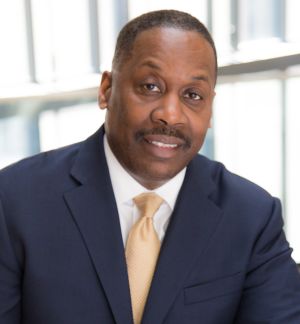 Thomas LaVeist, Ph.D., shares the inspiring journey that led him to the field of public health. At the height of New York’s crack cocaine and HIV/AIDS epidemics in the 1980s, LaVeist, then a newly-minted college graduate, was working valiantly to find housing for the homeless. His frustration at the imperceivable impact of his efforts gave way to a deep curiosity about the systemic underpinnings of social inequities, leading him to pursue a doctoral degree in sociology at the University of Michigan.
For LaVeist, the eye-opening moment came in a used bookstore as he flipped through a story about the sinking of the Titanic. He read about how a passenger’s ticket class determined whether they got a seat on a lifeboat, which struck him as a vivid analogy to the social determinants of health—and soon thereafter led him to find his place among the faculty in the School of Public Health.
Today, as Dean of the Celia Scott Weatherhead School of Public Health and Tropical Medicine at Tulane University, Dr. LaVeist is navigating reductions in federal research funding, uncertainty about the future of indirect cost recovery, and significant barriers to enrolling international students. Speaking with WittKieffer Principal Philip Tang, he provides a window into the future of public health education, including a warning about the role of AI.
Dr. LaVeist makes a pragmatic case for advancing health equity, which he sees as essential for national strength—a healthy workforce makes for a healthy economy. Conversely, health disparities lead to lives lost, which has a tangible cost that he believes is overlooked. “As a society, we invest in people, invest in their human capital—for example, [through] public schools. But if they die prematurely, we don’t recoup the return on that investment,” he says, which he considers “significant losses.”
According to Dr. LaVeist, there is another practical reality to consider. “As the nation becomes more diverse, the overall health of the U.S. will be a reflection of the health of the populations that we currently refer to as racial and ethnic minorities,” says Dr. LaVeist. “And this does not bode well for the proportion of the U.S. economy that we’re devoting to healthcare.”
Nonetheless, Dr. LaVeist remains optimistic about the future, one in which he is actively invested. He doesn’t shy away from politics. “It’s important to build relationships with people across the political spectrum,” he says.
Dr. LaVeist shares his perspectives on the national discourse regarding diversity, equity, and inclusion amid shifting political winds, higher education’s place in that dialogue, and the unique role universities play in weaving all people into the fabric of America.
He discusses how the interdisciplinarity nature of public health has enabled him to lead boundary-spanning initiatives at Tulane, bringing together faculty and students from across engineering, architecture, and other domains in a united front to improve human health. His leadership philosophy emphasizes accountability and adaptability—honed by jazz.
Enjoy their conversation.